As temperatures climb and afternoon winds pick up across Grants Pass, Medford, Ashland, and the Illinois Valley, property owners start asking the same urgent question: how do we our keep land safe and compliant during extreme fire danger without stalling critical projects? An experienced Southern Oregon contractor understands how quickly rules change, how to keep work moving, and when to pivot so you stay protected. This guide explains what you can do right now, what professionals can still handle, and what must wait until fire danger eases. Throughout, you will find practical steps tied directly to Rogue Valley land clearing services so you can make decisions with confidence.
What Extreme Fire Danger Means in the Rogue Valley
When the Oregon Department of Forestry’s Southwest Oregon District moves Jackson and Josephine counties to extreme fire danger, several activities are paused on lands they protect. The headline items include prohibitions on mowing dry or cured grass with power equipment, using power saws with internal combustion engines, cutting or welding metal in flammable vegetation, and running other spark-emitting engines where fuels are present. Electric chain saws are typically the exception, and mowing green lawns is generally still allowed. Local cities and districts echo the same themes, so always verify the latest bulletin for your address before you start.
For context, the same agencies issue detailed Public Use Restrictions that change with each fire danger step. Those documents explain timing limits during lower levels and the complete pause on certain tasks when conditions are red. They also clarify that many activities on unimproved roads or in dry vegetation are off limits during Extreme.
What Property Owners Can Still Do Today
Homeowners are not powerless during Extreme fire danger levels. Several low-risk actions remain both safe and advisable, and they add meaningful protection to homesites and outbuildings.
Tend the green, non-cured areas. Short, irrigated lawns can still be mowed, which helps maintain defensible space around structures. The prohibition targets dry or cured grass, not healthy irrigated turf. Check your local page if in doubt.
Use hand tools to create clean edges. Metal rakes, shovels, and hand-pulling still work wonders around propane tanks, fences, and woodpiles. Hand work avoids sparks and helps you tighten up the first 5 to 30 feet of defensible space without putting crews or property at risk. Guidance from local districts reinforces that the pause focuses on spark-producing equipment in flammable vegetation.
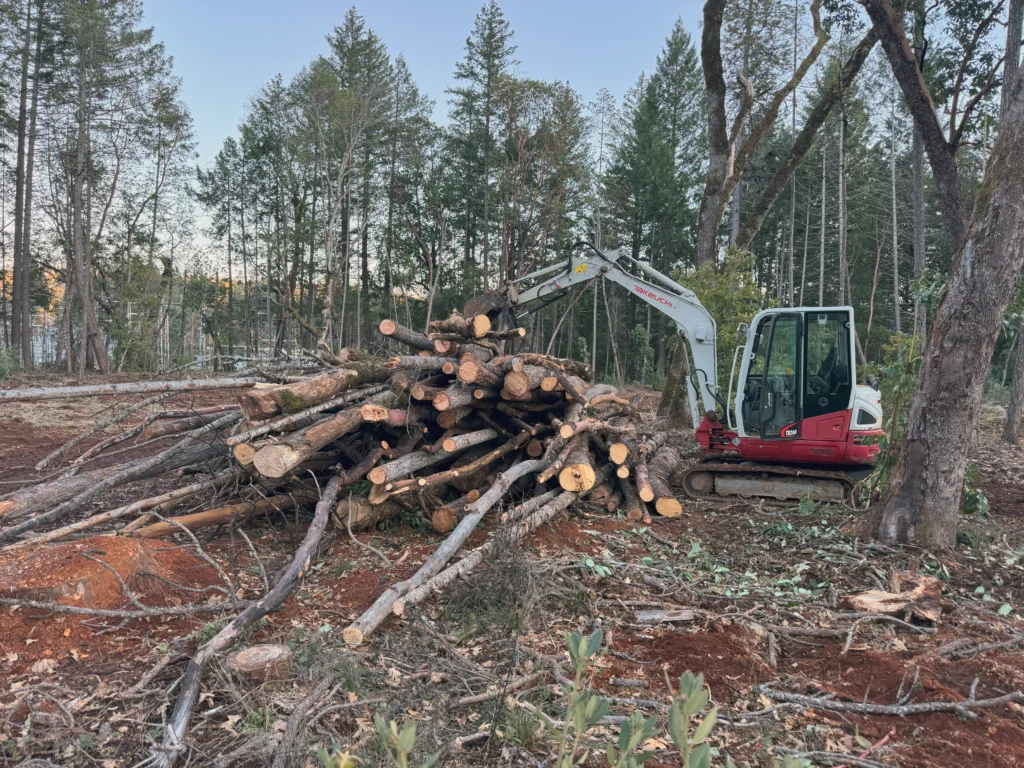
Stage debris for later hauling. You can consolidate small woody material into safe, covered piles on non-combustible surfaces for later removal. Debris burning remains prohibited during fire season, so think haul-away, not burning, once conditions allow.
Confirm your specific zone before any powered task. Some ODF materials note allowances for certain battery tools with plastic line, but local city or district pages can narrow or expand what is permitted based on current fuels and wind. Always defer to the most current local notice before you power up.
What Professional Contractors Can Still Do
Reputable crews in the Rogue Valley are built for this season. Even when blades and saws are quiet, productive work continues.
Compliance walk-throughs and work-planning. Professionals can mark defensible space priorities, flag riparian buffers, and map machine routes for when restrictions ease. That planning reduces your total time onsite later and prevents costly rework.
Hand-crew mitigation. While big iron is usually idled in dry fuels during extreme fire conditions, focused hand-work around structures, wellheads, and driveways can still proceed safely. Crews bring shovels, rakes, and water, and they stay within the rules posted for your area. Local pages for Jackson and Josephine counties outline these seasonal boundaries clearly.
IFPL awareness for industrial jobs. Some projects, especially on larger forested parcels, may fall under Industrial Fire Precaution Levels. Those rules govern when certain activities can occur and sometimes allow tightly constrained windows for specific operations at night or early morning on industrial sites. Experienced contractors separate public-use rules from industrial rules and will advise which framework applies to your property.
Rogue Valley Land Clearing Services That Must Pause During Extreme
There is no getting around it. During extreme fire danger levels, mowing dry or cured grass with power equipment, using internal combustion chain saws, cutting and welding metal in flammable vegetation, and running other spark-emitting engines in dry fuels are off the table. Grants Pass, Jackson County, and multiple fire districts have aligned with ODF on these restrictions this season. Expect consistent language about prohibitions and understand that enforcement exists to prevent starts when suppression resources are stretched thin.
The Eco-Conscious Path: Getting Ahead Without Tearing Up the Ground
Property owners here care about fire safety and habitat. The right plan balances both.
Why mastication keeps soils stable
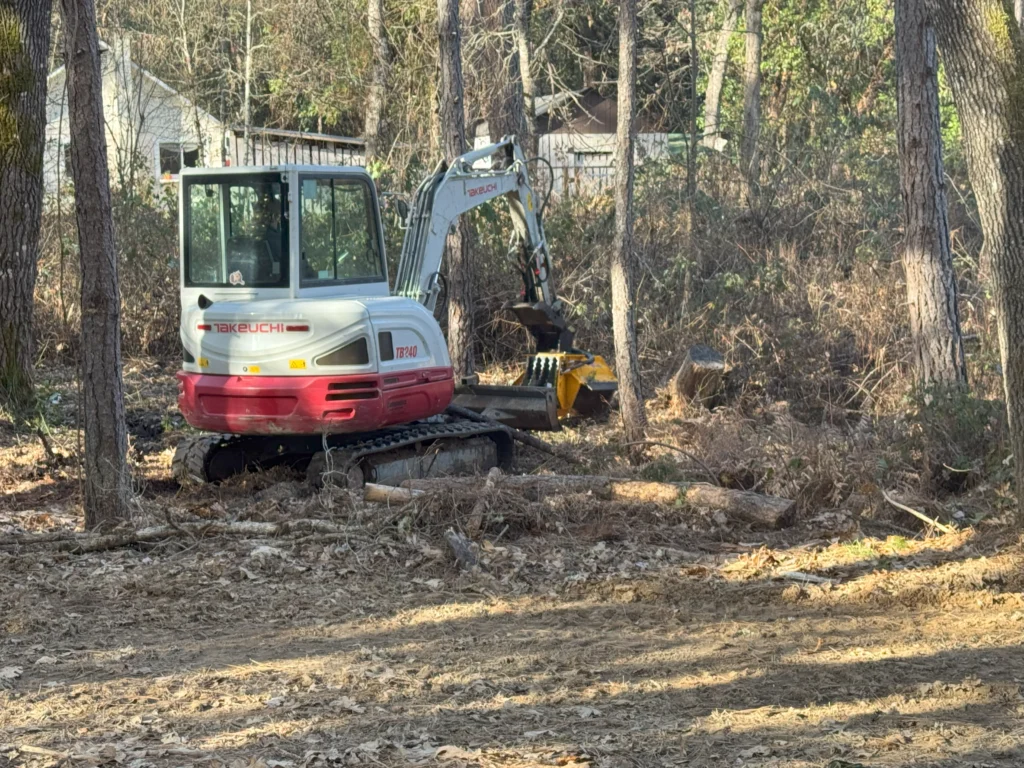
When the season allows mechanical work, mastication turns brush and ladder fuels into mulch that covers tracks and reduces bare soil exposure. Research across the West indicates mastication can limit soil disturbance when executed with good practices, especially on dry soils with careful equipment routing. In other words, you get width and depth on fuel reduction without the erosion penalty of frequent ripping or scraping. The use of a masticator is prohibited during extreme fire danger conditions. However, once the official levels drop to High, this equipment can be used with some restrictions. These restrictions typically include operating before 10:00 a.m., after 8:00 p.m. with at least a 2.5-lb extinguisher on hand.
Protecting riparian buffers while you clear
Oregon’s framework requires protective buffers along streams, wetlands, and lakes to safeguard water quality and habitat. Professional crews identify these riparian corridors before machines move, then adjust treatment methods and offsets so your project remains compliant while still improving your property and defensible space. This is where hand-work, selective cutting, and low-impact access shine.
Cleaner equipment matters
When heavy equipment returns after restrictions ease, Tier 4 clean burn diesel machines are the new baseline for clean operation. Compared to earlier tiers, Tier 4 standards slash particulate matter and nitrogen oxides by roughly 90 percent through advanced aftertreatment like SCR and DPF. That means less smoke at idle, smaller footprints around homes, and a cleaner outcome for neighborhoods and creeks.
Rogue Valley Land Clearing Services That Fit Each Season
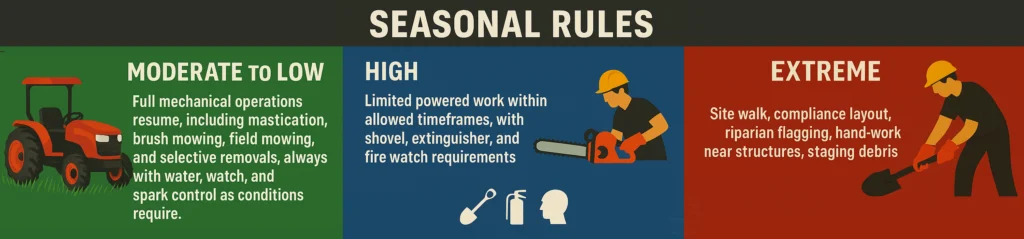
The smartest projects in Southern Oregon are phased. During extreme fire danger levels, the focus shifts to planning, hand-work, and staging. Once conditions move down to High and then Moderate, timing windows open up for mowing dead grass, chainsaw work with fire watch and equipment on site, and metal cutting within tight hours as long as the area is cleared and water or extinguishers are present. The Public Use Restrictions spell out those time-based allowances for each level, and your contractor should track them daily.
A typical workflow looks like this:
- Extreme Fire Danger: Site walk, compliance layout, riparian flagging, hand-work near structures, staging debris.
- High Fire Danger: Limited powered work within allowed timeframes, with shovel, extinguisher, and fire watch requirements.
- Moderate to Low: Full mechanical operations resume, including mastication, brush mowing, field mowing, and selective removals, always with water, watch, and spark control as conditions require.
Local Pain Points We Solve During Extreme Fire Danger
“I called three land clearing companies near me and everyone said to wait.” The right answer is not always a hard stop. The right answer is to switch to work that is both safe and allowed, then build momentum so the site is ready the day restrictions loosen.
“I need eco-conscious property management, not bare dirt.” That is achievable in Southern Oregon. Use mastication and selective cutting when the season allows, protect riparian corridors, and specify Tier 4 equipment for clean operation.
“How do I avoid a citation or a fire start?” Follow the local page for your address and let your contractor verify the day’s level. Rules can shift quickly with wind and humidity. Look to ODF Southwest Oregon District updates, city notices like Grants Pass, and district posts for the most current language.
Working With a Professional Contractor in Southern Oregon
A seasoned contractor serving the Rogue Valley brings local familiarity with Jackson and Josephine county notices, understands when industrial rules may apply, and can pivot between planning, hand-work, and full mechanical operations without losing days to confusion. They carry shovels, water, and extinguishers by default and will not put your project at risk by forcing a task that the season does not allow. That mindset keeps your property safer and your budget intact.
Ready to Move Forward Safely?
If you are weighing what to tackle on your land this week, the team behind Oregon Field Mowing Plus can map a practical plan that respects Extreme Fire Danger, protects riparian corridors, and sets you up for a clean, efficient push once conditions relax. For Rogue Valley land clearing services that fit the season and the site, visit the Land Clearing Services page and request a free consultation. You will get a clear scope, a compliance-first timeline, and a strategy that balances Oregon wildfire safety with a light touch on the land.
References for current seasonal rules and best practices are drawn from ODF Southwest Oregon District updates and local agency notices for Jackson and Josephine counties. Always confirm the latest bulletin for your location before starting any power-driven work.