June has arrived in Southern Oregon, and with it comes the familiar, rapid drying of our local fields and hillsides. As a long-time resident and land manager here in the Rogue Valley, I watch this transition every year. One week we are looking at green hills, and the next, the tall grass has turned to gold and the brush is bone dry. This is the moment when the Oregon Department of Forestry, also known as ODF, declares the official start of fire season. For property owners, this declaration means the clock is ticking to manage fuels and create a defensible space around homes and outbuildings.
My goal is to help you navigate these seasonal challenges while keeping your land, your family, and our community safe. That is why safe wildfire brush clearing is so critical during this early summer window. Doing this work responsibly requires a deep understanding of local conditions, a dedication to fire safety regulations, and the right equipment for the job. We cannot just drag any old machinery into dry fields when the risk is high; we have to be smart, disciplined, and prepared.
Understanding June’s Fire Risk And ODF Restrictions
As we move through June, the combination of rising daily temperatures and falling relative humidity quickly cures the fine fuels on our properties. Blackberry brambles, manzanita, scrub oak, and tall grasses become highly combustible. To manage this threat and prevent accidental ignitions, ODF regulates commercial and residential land clearing activities using Industrial Fire Precaution Levels, or IFPL. These levels dictate what kind of work can be done and specify the times of day we are allowed to operate power-driven machinery.
When we hit the higher precaution levels, we enter what locals call Hoot Owl shifts. Under these restrictions, commercial cutting, grinding, and mowing operations are limited to the early morning hours and must shut down completely by 1:00 PM. This is because the fire risk peaks in the hot, dry, and often windy afternoon hours. To keep your property compliant and safe, I strictly adhere to these regulations. This means shifting our operations to a morning schedule field mowing routine, ensuring we get the heavy work done when the relative humidity is at its daily high and the ambient temperatures are at their lowest.
Why I Use Tier 4 Clean Burn Engines And Mastication Technology
When you are clearing brush under strict fire restrictions, the machinery you bring onto the land matters just as much as the time of day you operate. Traditional mowing and clearing equipment can pose a spark hazard when striking rocks or running too hot in dry conditions. To minimize these hazards, I utilize advanced machinery equipped with Tier 4 Clean Burn Engines. These engines are designed to operate much cleaner and cooler than older diesel models. They feature integrated spark-arresting systems and advanced exhaust treatments that significantly lower the risk of exhaust-related ignitions while protecting our local air quality.
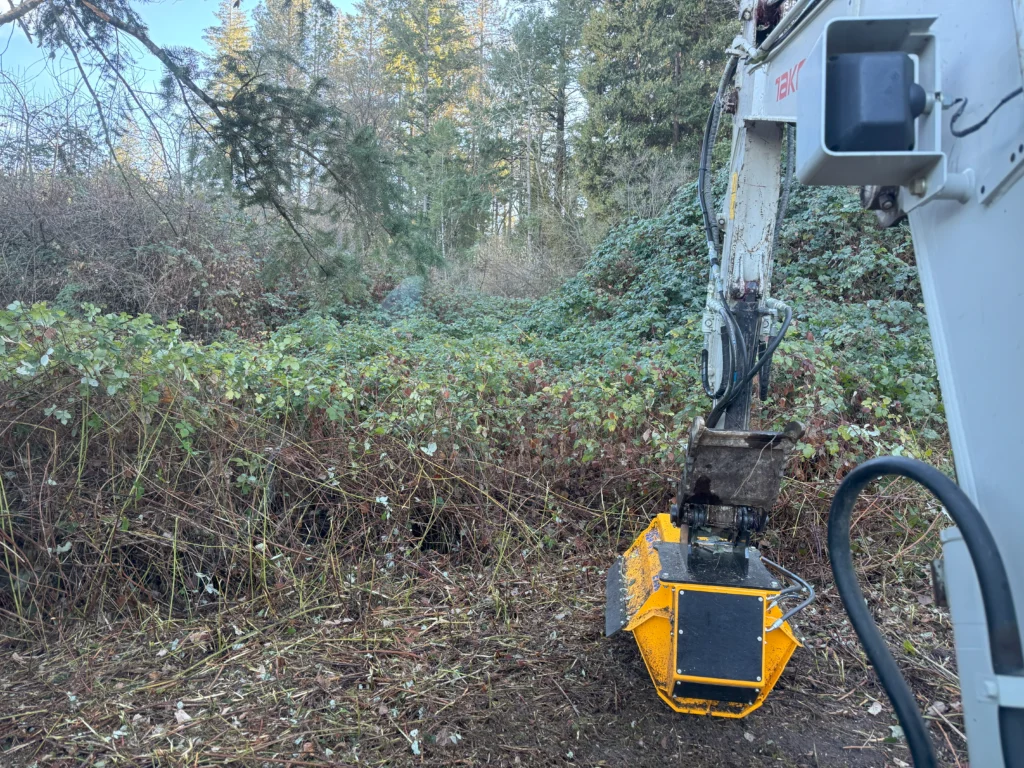
Beyond the engine itself, the attachment we use makes a massive difference in safety and efficacy. By using a heavy-duty masticator rather than a traditional rotary brush cutter, we change how the vegetation is processed. A masticator shreds brush, small trees, and heavy blackberry vines from the top down, turning standing fuel into a dense, flat layer of wood mulch. This mulching process does two things: it removes the vertical ladder fuels that allow ground fires to climb into the tree canopy, and it retains soil moisture, which helps keep the ground cooler. This is why I focus on mastication services in the Rogue Valley as the primary method for fuel reduction during the drier months. It is efficient, thorough, and highly effective at creating a defensible space without creating massive burn piles that would have to sit dangerously on your land until winter.
The Importance Of A Morning Schedule Field Mowing Routine
Working during Hoot Owl shifts requires careful planning and a disciplined routine. When I coordinate with property owners for morning schedule field mowing, we plan our start times to coincide with the earliest allowable hours under local guidelines. Starting at dawn allows us to take advantage of the morning dew and higher humidity levels. These natural conditions provide an extra layer of safety, making the ignition of dry fuels highly unlikely while we work.
But safe wildfire brush clearing is not just about stopping the machine at 1:00 PM. ODF regulations require a dedicated fire watch after the equipment has been shut down for the day. This means I remain on your property for at least one hour after the work is completed, actively monitoring the work area for any signs of smoke, smoldering debris, or heat. I carry dedicated fire suppression tools, including water fire extinguishers, shovels, and communication gear, on my rig at all times. By combining the low-emission, cool-running Tier 4 Clean Burn Engines with a strict morning schedule and vigilant fire watch, we can successfully complete necessary land maintenance without compromising the safety of your property or our neighbors.
Partnering For Professional Mastication Services In The Rogue Valley
Managing land in Southern Oregon is a year-round job, but the work we do in June is perhaps the most critical for protecting our homes from summer wildfires. Every property in the Rogue Valley is unique, presenting different slopes, fuel types, and access challenges. Some properties have heavy oak underbrush and poison oak, while others are dominated by overgrown fields of star thistle, wild mustard, and invasive Himalayan blackberry vines.
When you hire Dick Webster Mowing & More, you are not just hiring someone with a tractor. You are partnering with a neighbor who understands the local soils, the behavior of our regional winds, and the exact safety requirements of our local fire districts. My mastication services in the Rogue Valley are tailored to meet the specific safety needs of your acreage. We focus on low-impact, high-efficiency clearing that leaves your soil intact, prevents erosion, and drastically reduces the fuel load on your land, giving your home a fighting chance if a wildfire ever approaches.
Let’s Get Your Property Prepared Safely This Season
We all know how quickly the summer heat takes hold in Southern Oregon. Waiting until July or August to address overgrown brush and dry fields only increases the risk and limits the hours we can safely work. Taking action now, while we can still utilize early morning operations, is the smartest way to protect your investment and give yourself peace of mind heading into the hottest months of the year.
If you have acres of overgrown brush, encroaching blackberries, or tall grass that needs attention, I am here to help. I will work with you to assess your land, plan out a safe wildfire brush clearing strategy, and schedule the necessary morning schedule field mowing before the fire restrictions tighten even further. Let’s work together to keep our neighborhoods safe this summer. Contact me today to discuss your property and get a free estimate for our mastication and clearing services.