
Winter brings a different rhythm to land work in Southern Oregon. By November, most folks in the Rogue Valley are already thinking about how to manage runoff, improve access, or prepare their property for the wet months ahead. Winter land prep requires a practical balance of timing, soil awareness, safety, and reliable equipment. Trench digging in Southern Oregon happens year round, but winter is one of the best times to take on projects that help protect your property from water damage and seasonal wear.
When you handle projects like drainage trenches or driveway culvert installations at the right time of year, you prevent headaches that usually show up in January. Muddy roads, standing water, erosion, and washout can turn a simple fix into a bigger repair. I have seen it too many times. The goal is to set the land up before winter storms saturate the ground so you are not rushing repairs when water is already moving in directions it should not.
Why Trench Digging in Southern Oregon Works Well in Winter
Trenching during the colder season has practical advantages. The soil in areas like Grants Pass, Merlin, and Central Point often holds enough moisture to make excavation smooth without being fully waterlogged. When the ground has the right level of moisture, a mini excavator can work cleanly, and the trench walls stay stable without constant sloughing. These are the conditions that help create predictable results.
Another reason winter land prep is ideal is the timing. Once the heavy rains arrive, property owners see exactly where their water problems are. That means jobs like drainage ditch creation or culvert replacement can be planned with real data instead of guesswork. If water is pooling at the edge of your driveway or cutting channels down a hillside, a properly placed trench can redirect flow and prevent long term damage. Winter makes these issues easier to identify and fix before spring runoff expands them.
Common Drainage Issues That Benefit from Winter Trenching
Anyone who has a home or acreage in Southern Oregon knows how unpredictable winter rain can be. Some years it trickles in. Other years it pours for days through the Rogue Valley and Illinois Valley. A well placed drainage trench can keep water from settling around your foundation, barns, sheds, or low areas.
You might notice that after the first real storm, certain spots stay saturated longer than others. Clay heavy soils in places like Rogue River and the Applegate Valley are known for holding water. When you see that happening, it is time to cut a shallow trench that pulls that water toward a natural runoff location. A mini excavator makes it possible to create these channels with enough precision to avoid disrupting other parts of the land.
Driveway drainage is another common issue. Many rural properties rely on gravel driveways that pass through seasonal runoff paths. As rain increases, culverts can fail from age, clogging, or improper sizing. If a driveway culvert collapses or gets overwhelmed, the roadbed often erodes within days. Installing a new culvert or reworking the old one is much easier before conditions reach that point. Winter preparation offers a window where soil can still be shaped and compacted effectively.
Preparing for Heavy Rain Through Proper Trench Planning
It is easy for trench digging to look simple from the outside. In reality, the planning stage is where most successful winter drainage projects begin. Before cutting into the ground, you always want to understand the natural slope of the land. Southern Oregon terrain varies a lot even within the same property. A trench in Grants Pass might need only a slight grade to move water, while a trench in Williams or Cave Junction may require a defined angle to keep water flowing without stagnation.
The layout depends on understanding how water behaves on your land. Sometimes the best solution is a single trench that moves runoff away from a structure. Other times, a series of shallow channels works better. The goal is not to force water where it naturally resists going. It is to assist the natural flow and prevent damage.
A light touch is often the smartest approach. Overworking the land can cause erosion, even if the intention is good. That is why working with a mini excavator is ideal. You have control, precision, and the ability to shape the land thoughtfully without heavy disturbance.
Safe Winter Trenching Practices for Property Owners
Safety matters more during winter land prep than many people realize. Wet conditions can hide underground hazards or soften soil around utility lines. Before any trench is dug, I always encourage property owners to mark utilities and call for line location services if there is any doubt.
During wetter months, soil stability can change quickly. A trench that was stable in the morning might begin to slump by afternoon if rain sets in. The key is to dig only what you can finish the same day. Winter trenching works best when each job is approached with a clean plan and steady workflow.
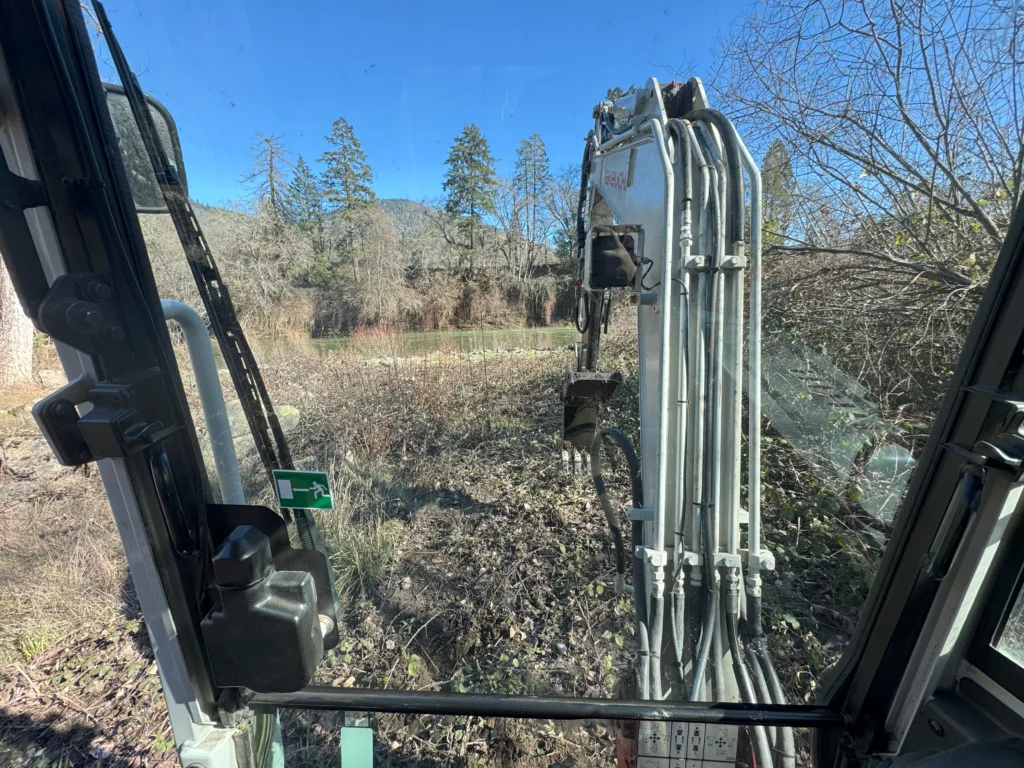
The mini excavator is an efficient machine for these jobs because its footprint is small. It does not churn up large areas the way heavier equipment does. That is especially helpful for properties in hillside areas like Jacksonville or Ashland where terrain can be uneven and space limited.
Environmentally Conscious Land Prep in the Winter Season
It is worth noting that thoughtful trenching can support healthier land over time. Directing water flow where it naturally wants to go reduces erosion, protects root systems, and prevents over saturation in sensitive zones. Even small changes to drainage patterns can support long term property health without unnecessary disruption.
A careful trenching approach aims to work with the land rather than against it. That is the entire philosophy behind responsible land clearing service work in this region. Winter gives you a chance to do it in a way that avoids harm and strengthens your property.
When Driveway Culvert Trenching Becomes Necessary
Culvert issues can escalate quickly in rural areas, especially around Grants Pass and the Rogue River corridor. A failing culvert is easy to spot once winter rains hit. You may see water backing up on one side of the driveway or cutting a channel across the road surface. Gravel may start washing out, leaving ruts that grow deeper with every storm.
Winter is an ideal time to replace or trench for a new culvert because conditions are clear and predictable. Once spring hits, water volume increases with snowmelt and runoff, making excavation harder. A mini excavator allows you to set the culvert at the proper depth, shape the inlet and outlet, and stabilize the soil before the heaviest rains arrive.
A properly installed culvert protects your access road, prevents erosion, and gives water a clean route through your property.
How Trench Digging in Southern Oregon Supports Overall Land Prep
A trench is more than a cut in the ground. It is a tool that supports the long term health of your land. When done correctly, it enhances drainage, protects structures, improves road access, and reduces unnecessary water pooling.
Winter is the right season for these projects because it shows you the truth of how your property handles water. A contractor with local experience understands that the Rogue Valley and surrounding areas each have their own soil quirks, water table behaviors, and seasonal challenges. Those lessons come from time spent working the land and learning how it reacts.
Ready for Winter Land Prep on Your Property?
If you want to get ahead of winter flooding, improve your driveway access, or prepare your land for the season ahead, this is the right time to schedule trench work. Drainage trenches and driveway culvert projects protect your property when it matters most. A skilled operator with a mini excavator can shape the land precisely and safely while soil conditions are ideal. For more information about trenching, culvert installation, drainage solutions, or broader land prep projects, visit the land clearing services page.
Your property will handle the winter weather better when the groundwork is done right.